
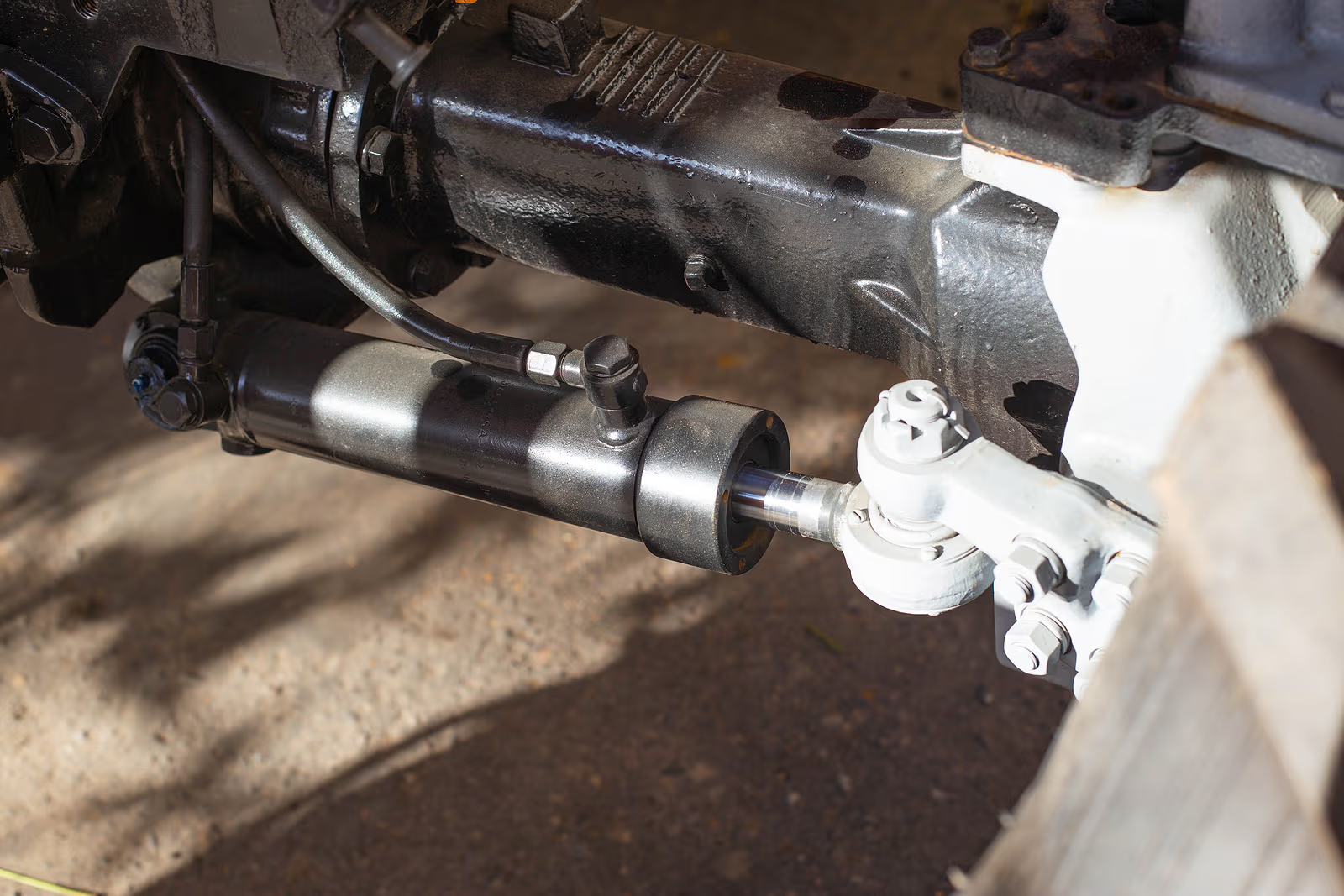
The first clue often shows up in a parking lot, not on the highway. Worn power steering pump symptoms usually begin as a wheel that needs extra hand strength during slow turns, backing out of a driveway, or pulling into a tight space. Many U.S. drivers mistake it for cold weather, old tires, or a bad alignment because the car still tracks straight once it is moving. That delay is where the cost starts to grow.
A steering assist system does not fail with drama every time. It can fade by inches: a faint groan, darker fluid, a small wet spot under the front of the car, then a wheel that fights you near full lock. For drivers comparing repair advice from local shops, a plain car ownership resource can help separate noise from risk before money gets spent. The key is knowing which clues point to the pump, which point to a belt or rack, and when the safest move is to stop driving.
Power Steering Pump Symptoms That Start Before the Wheel Feels Heavy
Most pump failures begin with small changes in assist, not a total loss of steering. That matters because the wheel may feel normal at 45 mph, then act stubborn while you are pulling into a grocery store space. The pump works hardest when engine speed is low and tire scrub is high, so the first complaints often happen in driveways, school pickup lanes, and crowded apartment lots. A driver who only tests the car on open roads can miss the warning for weeks. The sharper read comes from ordinary errands, where the system gets hot, slows down, and has to build pressure over and over.
Why hard steering at low speed feels worse first
Hard steering at low speed is often the first sign because the tires are fighting the pavement without much rolling motion to help them. When you turn into a parking space in a midsize SUV, the front tires drag across the asphalt. The pump has to build enough hydraulic pressure to help the rack move those tires. A tired pump may still help a little, but not enough.
Here is the part many drivers miss: highway steering can hide the problem. At speed, tire movement needs less assist, and the car may feel close to normal. That does not mean the system healed itself. It means the test was too easy. City driving is the better test because it loads the system again and again. If the wheel feels normal on a straight road but heavy while turning into a bank drive-through, trust the bank drive-through.
A useful check is a slow figure-eight in an empty lot. If the wheel feels heavier near the ends of travel, or if the assist fades after a few turns, the pump is no longer keeping up. Do not hold the wheel against the stop. That can raise pressure and heat fast. One clean pass is enough to feel whether the assist is steady or fading. Repeated full-lock turns do not prove more; they only add heat and strain.
When a whining noise when turning changes pitch
A whining noise when turning can sound like a small siren under the hood. It often gets louder as the wheel moves and may rise in pitch when you reach a tight turn. Some drivers hear it first on cold mornings, then ignore it once the engine bay warms up. That is a mistake because the same noise often returns sooner as wear grows.
The noise is not only annoying. It can mean the pump is pulling air, fighting low fluid, or wearing its internal vanes. Air bubbles make fluid foamy, and foamy fluid cannot carry pressure well. That is why a noisy system may also feel uneven at the wheel. The steering may help for one turn, then feel dull on the next.
One non-obvious clue is a whine that changes with engine rpm while the wheel is still. That can point toward the belt, pulley bearing, or pump shaft, rather than the rack. A shop should listen with the hood open, check belt tracking, then turn the wheel while watching fluid movement in the reservoir. The sound tells a story, but only when someone listens in the right order.
What Actually Wears Out Inside the Steering Assist System
The steering assist system is simple in concept, but it lives a hard life. The pump spins whenever the engine runs. Fluid handles pressure, heat, rubber hose particles, and metal wear dust. A small problem in one area can make another part look guilty, which is why guessing gets expensive. The best repair does not begin with the part number. It begins with the reason the part failed. That answer often lives in the fluid, the hose ends, or the belt drive rather than in the loudest component.
How a power steering fluid leak starves the system
A power steering fluid leak may start as a damp hose crimp, a wet pump body, or a reddish-brown spot on the driveway. On some vehicles, the leak lands on a splash shield and never reaches the ground right away. That fools owners because the reservoir keeps dropping with no obvious puddle. By the time the stain shows up, the pump may have been running low for days.
Low fluid does two harmful things at once. It reduces pressure, and it lets air enter the circuit. The pump then spins through a mix of fluid and foam, which is closer to whipping cream than clean hydraulic oil. Assist becomes weak, noise climbs, and internal wear speeds up. A leak that looks small from outside can be loud inside the pump.
Do not only look under the pump. Check the return hose, pressure hose, rack boots, cooler lines, and reservoir seam. A Honda Accord owner in Ohio might see wetness after winter because salt and age attack hose fittings. A pickup in Arizona may show cracked rubber from heat instead. Different climate, same result. The system loses the clean fluid column it needs to build pressure.
Why dirty fluid can mimic a bad rack
Dirty fluid can make the steering rack feel rough even when the rack is not the main failure. Old fluid loses its clean red or amber look and turns brown, gray, or burnt-smelling. It may also carry fine metal particles that act like sanding dust inside the pump and valves. The wheel may feel notchy, and a driver may blame the rack at once.
This is where a quick repair can backfire. Replacing the rack without checking the fluid leaves the dirty oil in circulation unless the system is flushed correctly. The fresh part then receives the same grit that helped kill the first one. That is not repair. It is a delayed repeat bill. A clean reservoir means more than a clean invoice.
A better inspection asks two questions. Is the pump failing because it is worn, or did dirty fluid and a leak push it there? When a shop answers that before installing parts, the final repair lasts longer. The counterintuitive answer is that the cheapest line item may be the fluid service, not the part. Clean fluid cannot save a ruined pump, but it can protect a new one. If a shop refuses to discuss contamination after a noisy failure, ask harder questions before approving the estimate.
How to Diagnose the Problem Before Buying Parts
Good diagnosis protects your wallet. A stiff wheel can come from the pump, but it can also come from a slipping belt, weak tensioner, seized steering joint, clogged reservoir screen, binding rack, or wrong fluid. Throwing a pump at every complaint is how a $40 hose problem becomes a weekend of frustration. The goal is not to prove the pump bad. The goal is to prove every cheaper suspect innocent first. A careful ten-minute check can change the job from replacement to adjustment, and that difference matters when repair money is tight.
Start with fluid, belt, pulley, and hose checks
Start with the fluid level when the engine is off and the car is parked on level ground. Use the correct mark on the reservoir or dipstick, since some vehicles have hot and cold ranges. If the level is low, top it with the fluid type listed in the owner’s manual, then look for the reason it dropped. Guessing on fluid type can create new noise, especially on vehicles that need a specific manufacturer formula. Some Asian, European, and domestic models do not share the same fluid demands, even when the reservoirs look alike.
The belt matters as much as the fluid on many older cars and trucks. A glazed belt can slip under steering load, especially when rainwater or engine oil touches it. You may hear a squeal, then feel the wheel stiffen for a second. That moment can mimic pump failure. A weak tensioner can do the same thing even when the belt looks acceptable.
A pulley check is plain but useful. Watch for wobble while the engine runs, then shut the engine off and inspect hose routing. A pressure hose rubbing against a bracket can weaken over time. A return hose that looks dry on top may be wet underneath. Use a light and a paper towel, not a bare hand near hot or moving parts.
Know when the rack, belt, or sensor is the real fault
Some vehicles use hydraulic assist. Others use electric assist. Some newer models use electric-hydraulic assist, where the pump is driven by an electric motor instead of a belt. That difference changes the diagnosis. A dashboard warning light and no belt noise may point toward an electrical assist fault, not old hydraulic pump wear.
The recent attention around steering-related recalls is a reminder that assist loss is not always a simple maintenance issue. U.S. owners can check open safety recalls through the NHTSA recall lookup, which shows recall information by VIN or license plate. That check is worth doing before paying out of pocket because some faults may be handled by the manufacturer.
A steering rack usually gives different clues. You may feel a catch in one part of the wheel travel, see fluid inside a rack boot, or hear a knock over bumps. A pump problem tends to affect assist more broadly. The wheel feels loaded from side to side, and the noise often follows turning effort. If the car pulls, wanders, or eats tires, the steering system may not be the only issue.
Repair Choices, Costs, and Safety Decisions for U.S. Drivers
Once the symptoms are clear, the next question is whether to keep driving, repair now, or plan the work for payday. That choice should be based on control, not hope. Steering is not like a weak radio speaker. When assist fades at the wrong moment, the car can still turn, but your reaction time shrinks. In a tight parking lane, a school zone, or a rainy freeway ramp, that matters. A driver in Chicago traffic may notice the problem while squeezing into curbside parking, while a driver in Dallas may feel it during a slow gas-station turn after a hot commute. Both examples point to the same truth: low-speed control exposes weak assist faster than open-road driving.
When to stop driving instead of limping home
Stop driving if the steering suddenly becomes hard, if fluid pours out, if smoke appears near the belt area, or if the wheel jerks instead of moving in a smooth arc. Use hazard lights, pull to a safe spot, and call for help. Muscle can turn a car without assist, but it cannot bring back predictable control in a panic lane change. That is where pride gets expensive.
A slower failure gives you more room to think. If the wheel is stiff only during parking and fluid is slightly low, you may be able to drive to a nearby shop with caution. Stay off fast roads when possible. Leave extra space. Avoid tight U-turns. Turn the radio down so you can hear changes from the belt or pump.
The counterintuitive part is that a car may feel easier to steer once it is moving, which tempts people to keep going. The danger returns when you slow down for a gas station, driveway, or emergency stop. Those are the moments when assist matters most. A five-mile trip can feel fine for four miles and ugly in the final turn.
How to choose between repair, replacement, and prevention
Repair choice depends on the cause. A loose belt, failing tensioner, cracked return hose, or leaking reservoir may cost less than a pump replacement. A true pump failure needs a quality part, correct fluid, and a clean system. Skipping the flush can shorten the life of the new unit. So can ignoring a hose that sheds rubber inside.
For many U.S. vehicles, the total bill can vary by layout. A compact sedan with open engine access may be easier than a luxury SUV with tight packaging. Parts quality also matters. Cheap rebuilt pumps sometimes whine right out of the box, especially when the old fluid and debris remain in the lines. Ask whether the estimate includes bleeding the system, checking the belt drive, and inspecting hoses. A fair estimate should explain what failed, what will be cleaned, and what old parts may contaminate the new part if left alone.
Prevention is not glamorous, but it works. Check the reservoir during oil changes, fix small leaks early, and read our guide to steering fluid leaks before the level drops again. If belt noise appears after rain or a cold start, use this belt noise troubleshooting checklist to narrow the cause before the pump gets blamed. A few minutes of checking can save a part that still has life left.
Conclusion
Steering problems rarely reward patience. The smart move is to treat new effort at the wheel as a warning, not as a quirk your car picked up with age. A worn power steering pump can begin with a small whine, a low reservoir, or a wheel that only fights during slow parking moves.
The better you read those early clues, the less likely you are to buy the wrong part. Check fluid condition, leaks, belt drive, pulley behavior, and rack signs before approving a repair. If the wheel gets heavy without warning or the system loses fluid fast, do not turn the drive home into a test of strength.
Good steering should feel boring. That is the point. The repair that feels inconvenient on Tuesday can be the decision that keeps Thursday’s commute calm. No driver wants another shop visit, but steering is one place where early attention still pays for itself. When steering stops feeling boring, listen early, inspect carefully, and get the right fix before a small assist problem becomes a safety problem.
Frequently Asked Questions
How do I know if the steering pump is failing or low on fluid?
Low fluid often causes noise, foam in the reservoir, and uneven assist after turns. A failing pump may keep whining even after the fluid is corrected. The smart first step is to fill with the correct fluid, inspect for leaks, then retest steering effort.
Is it safe to drive with heavy steering?
It depends on how sudden and severe the problem is. Mild stiffness during parking may allow a short drive to a nearby shop. Sudden assist loss, fluid pouring out, smoke, or jerky wheel movement means you should stop and arrange a tow.
Why does my steering get stiff only when parking?
Parking puts the highest load on the assist system because the tires are turning against pavement with little rolling help. A weak pump, slipping belt, low fluid, or binding front-end part can show up there before it feels wrong on the road.
Can a fluid leak make the wheel hard to turn?
Yes. A leak lowers pressure and lets air enter the hydraulic circuit. Air makes the fluid foam, and foamy fluid cannot transfer force cleanly. That can create hard steering at low speed, noise, and heat damage inside the pump.
What does a bad steering assist pump sound like?
It often makes a whining, groaning, or moaning sound that grows louder during turns. The noise may be worse near full lock or when the vehicle is cold. A squeal, by contrast, can point toward a belt or tensioner issue.
How much does steering pump replacement cost in the USA?
Many U.S. repairs land in the few-hundred-dollar range, but the final price depends on vehicle layout, part quality, labor access, and whether hoses or fluid flushing are included. Luxury models, trucks, and cramped engine bays often cost more.
Can cold weather make steering problems worse?
Yes. Cold fluid moves slower, belts can slip more, and weak hoses may seep after temperature swings. A healthy system should still settle down quickly. If noise or stiffness returns every cold morning, inspect the fluid, belt, and hoses.
Should I replace the belt when replacing the pump?
Often, yes, if the belt is glazed, cracked, stretched, or oil-soaked. A worn belt can make a new pump act weak by slipping under load. Replacing a suspect belt during the same repair can prevent repeat noise and steering complaints.