
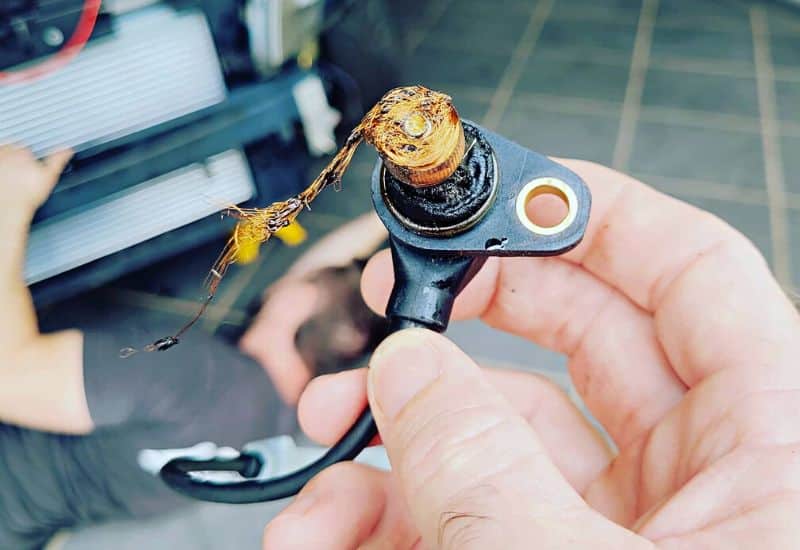
A no-start car has a way of making every guess feel expensive. When a crankshaft position sensor stops sending a clean timing signal, the engine may crank like normal yet refuse to fire, because the computer cannot trust where the crank is in its rotation. That is why the common clues matter: an engine cranks but won’t start, the tach needle may stay flat, the check engine light may store a P0335 code, and the car may stall hot, then restart after cooling. For U.S. drivers trying to avoid blind parts swapping, good practical automotive troubleshooting guides can help separate a weak battery, fuel issue, bad cam sensor, or failed CKP sensor before money gets wasted. The first useful question is not “Which part is bad?” It is “What signal did the engine lose at the exact moment it stopped acting like an engine?” That mindset keeps the repair calm, even when the car is sitting dead in a driveway, store parking lot, or shop bay. It also protects you from the most common mistake in no-start diagnosis: believing a normal cranking sound means the computer has all the information it needs.
Why Crankshaft Position Sensor Failure Creates a No-Start
The CKP sensor is small, but it sits near one of the most honest parts of the engine: the rotating crank. It watches teeth, slots, or a tone wheel pattern and turns that movement into an electrical signal. The engine computer uses that signal to decide when to fire spark, when to pulse the injectors, and how fast the engine is turning. When the signal drops out, the starter can still spin the engine, the dash can still light up, and the fuel pump may prime for a second. That is what makes the fault annoying. From the driver’s seat, the car sounds close to starting, yet one missing timing signal can keep the whole process locked out. The strange part is how ordinary the failure can feel. There may be no grinding, no smoke, and no dramatic warning. The engine can sound healthy while the control system is blind.
When the engine cranks but won’t start
The classic complaint is simple: the engine cranks but won’t start. You turn the key or press the button, the starter spins, and the engine never catches. A weak battery usually sounds slow or strained. A bad CKP sensor often sounds normal, which tricks people into chasing fuel first.
A common real-world example is a high-mileage sedan that starts every morning, then refuses after a hot fuel stop. The owner waits twenty minutes, tries again, and it fires as though nothing happened. Heat can open a weak internal circuit in the sensor or expose a poor connector fit. Once the part cools, the signal returns.
Here is the non-obvious part: a failed sensor may not always kill spark and fuel in the same way on every car. Some systems cut injector pulse, some lose ignition timing, and some store a code only after repeated failures. That is why guessing from one symptom alone can burn a Saturday.
Why the tachometer and scan data tell a cleaner story
The tachometer can give a quiet clue during cranking. On many vehicles, if the tach needle does not move at all while the starter spins, the computer may not be seeing engine speed. That does not prove the CKP sensor is bad, but it points toward the RPM signal path.
A scan tool gives a better view. If live data shows zero RPM while the engine is being cranked, the computer is not receiving a usable engine-speed signal. That puts the sensor, its wiring, connector pins, tone wheel, or computer input on the suspect list. It also keeps you from replacing a fuel pump because the rail pressure “felt” low.
A home mechanic in Ohio might see a P0335 code on a parts-store scan, buy a sensor, and still have a dead car. The code points to the circuit, not always the part. Corrosion in a connector near road-salt spray can break the signal as cleanly as a failed sensor body. The cheap test is often visual: tug gently on the harness, inspect oil soak, and look for rubbed insulation before opening the wallet. If the car reacts when the harness is moved, you have learned something valuable without removing a single bolt.
Symptom Patterns That Separate Sensor Trouble From Fuel or Battery Problems
Once the car starts acting up, every system seems guilty. A weak battery can mimic a dead sensor. A failing fuel pump can mimic ignition loss. A clogged air path can make idle ugly. Good diagnosis starts by sorting the pattern, not by memorizing a list. The CKP sensor sits in a strange middle ground because it can cause a hard no-start, then act normal on the next attempt. That early stage is where many drivers miss it. The car gives small warnings, and then one afternoon it refuses to leave the grocery store. A fuel problem often fades in a different way, with longer crank time, weak pull under load, or sputtering as pressure drops. A CKP signal loss can feel more like a light switch. One second the engine knows where it is. The next second, it does not.
Stalling, misfires, and hot restart drama
Engine stalling while driving is the symptom that deserves the most respect. A sensor signal that cuts out at speed can make the engine shut down without much warning. Power steering and brake assist may still work for a short moment, but the safe move is to signal, coast to the shoulder, and avoid repeated restart attempts in traffic.
Misfires can appear before a full stall. The computer may receive an uneven signal and fire spark or fuel at the wrong moment. The result can feel like a buck, stumble, or sharp hesitation during acceleration. It may not feel like an electrical fault. It can feel like bad gas, a dirty throttle body, or one weak coil. That is why a driver’s description matters. “It jerked once and shut off at a red light after the A/C had been running” says more than “it ran bad.”
Hot restart trouble is another strong clue. Heat raises electrical resistance and can make old sensor windings or weak solder joints act up. The odd part is that the car may pass a cold test in the driveway. A shop that tests only after the vehicle cools may find nothing, which is why describing the timing of the failure matters as much as naming the symptom.
Warning lights, stored codes, and the P0335 code
A check engine light helps, but it does not think for you. The P0335 code often points to a crank sensor “A” circuit fault, which means the computer saw a missing or bad signal. Related codes can also show up, depending on the vehicle and the kind of signal loss.
The code becomes useful when paired with the moment the problem happened. If the light came on after engine stalling while driving, the code carries more weight. If it appeared after a long crank with a weak battery, voltage drop may have confused the computer. Context saves parts. A pending code can matter too, even before the light stays on. Many drivers ignore pending data because it sounds uncertain, but intermittent electrical faults often live there first.
One small trap catches DIY owners: clearing the code before writing it down. If the car will not restart, leave the evidence in place until it is scanned and recorded. A stored freeze-frame can show engine speed, coolant temperature, battery voltage, and other clues from the failure moment. That little snapshot can be worth more than a new sensor in a box.
Testing Before You Replace the Sensor
A CKP sensor is not always hard to replace, but access can make the job ugly. Some sit near the crank pulley. Some hide behind the starter. Some are buried near the transmission bellhousing, exactly where heat, oil, and grime collect. A $35 part can turn into a long labor bill when the location is hostile. That is why testing matters. You are not trying to become a dealer technician in the driveway. You are trying to avoid the worst repair habit in car ownership: buying parts until the car forgives you. It rarely forgives cheaply. A careful test plan may feel slower at first, but it usually beats installing a part, clearing the light, and seeing the same no-start return two days later.
Start with the simple checks no one wants to do
Begin with battery voltage and cranking speed. If the starter drags, the computer may not see a stable signal. Clean battery terminals, a healthy ground path, and proper starter speed are the base of the test. Skipping this step is how a sensor gets blamed for a power problem. On late-model vehicles, low cranking voltage can make several modules act strange at the same time, which makes the first scan look worse than the true fault.
Next, inspect the connector and harness. Look for oil in the plug, broken lock tabs, green corrosion, and wires rubbed against brackets. In northern states, salt and slush can attack low-mounted connectors. In hotter states, brittle insulation near the engine block can crack from years of heat.
A useful sequence looks like this:
- Scan for stored and pending codes before clearing anything.
- Watch RPM on live data while cranking.
- Inspect the sensor connector and nearby wiring.
- Check for service bulletins or recalls by VIN.
- Test the signal if tools and access allow it.
That order keeps the work sane. It also helps you decide when a mobile mechanic or shop scope test is worth the money, especially when the engine cranks but won’t start only after a long drive.
Multimeter tests help, but a waveform tells the truth
Some CKP sensors can be checked with a multimeter. A two-wire magnetic sensor may have a resistance range in the service manual. A three-wire Hall-effect sensor may need power, ground, and a switching signal check. The wrong test can mislead you, so the service information for your exact engine matters. Do not assume a resistance number from another engine applies to yours, even when the parts look alike.
A lab scope is better because it shows the waveform while the engine cranks. A clean pattern means the sensor is speaking. A missing tooth pattern may be normal if the system uses it for reference. A broken, weak, or noisy pattern tells a different story. This is where trained diagnosis beats guesswork.
The counterintuitive insight is that a new sensor can still fail the repair if the tone wheel is damaged. Some engines use a reluctor wheel inside the engine or near the crank. If that wheel cracks, moves, or collects metal debris, the sensor may read nonsense. Replacing the reader will not fix a bad page.
Repair Choices, Costs, and Safety for U.S. Drivers
Once the fault is narrowed down, the repair decision gets more practical. Some CKP sensors are cheap and reachable from under the car. Others sit in cramped places where labor costs more than the part. The right choice depends on access, test results, and how the vehicle failed. A pickup used for work in Texas and a commuter crossover in Michigan may share the same symptom, yet the repair risk can be different because heat, salt, oil leaks, and harness routing age parts in different ways. For a daily driver, the safety angle comes first. A no-start in your driveway is inconvenient. A stall across an intersection is different. Any pattern tied to engine stalling while driving should move near the top of your repair list, even if the car restarts later.
What replacement usually involves
Replacement often means disconnecting the battery, unplugging the sensor, removing one small bolt, and pulling the part from its bore. That sounds easy until the sensor is stuck in place from age, oil varnish, or road grime. Forcing it can break the plastic body and turn a quick repair into extraction work.
On many cars, the repair also calls for clearing codes and, in some cases, performing a relearn procedure. The relearn helps the computer match the new signal pattern to the engine. Some cars learn on their own after drive cycles. Others need a scan tool. Skipping this step can leave a light on or create rough running after the part is replaced.
A fair shop should explain whether the diagnosis showed signal loss, circuit damage, or a sensor fault. “It needs a crank sensor” is not much of an explanation. Ask what the scan data showed during cranking. Ask whether the connector was checked. Those two questions often separate a careful repair from a parts swap. They also make the invoice easier to trust because you know whether you paid for proof or hope.
When to tow, when to drive, and when to check recalls
If the engine cranks but won’t start at home, towing is usually safer than repeated long cranking. Long cranks can drain the battery, overheat the starter, and flood some engines. On push-button cars, repeated attempts can also create extra fault codes that muddy the picture.
If the car stalls while driving, do not treat the next restart as proof that the issue healed. Intermittent faults are famous for returning at worse moments. A vehicle that dies hot in a drive-thru can die hot on a ramp. That is not a scare line. It is how electrical heat failures behave.
Before paying for work, check the NHTSA recall lookup with your VIN and look through owner notices for your model. A recall may not name the CKP sensor, yet it can cover wiring, powertrain software, or stalling complaints. Also read how to diagnose a car that cranks but will not start and common check engine light causes before inspection when you want a wider view of the problem.
Conclusion
A dead-start complaint feels urgent because it interrupts normal life fast. Still, the smart repair begins with the signal story, not the loudest guess. The starter spinning, the tach staying flat, a stored P0335 code, and heat-related restart trouble all point toward timing-signal loss. That does not mean the sensor body is guilty every time. Wiring, connectors, battery voltage, and tone wheel damage can copy the same act.
The best move with crankshaft position sensor trouble is to test the path before replacing the part. Watch live RPM during cranking. Save the codes. Inspect the harness. Then decide whether the repair belongs in your driveway or at a shop with a scope. That approach costs less in the long run because it respects how modern engines make decisions. It also lowers the chance of blaming fuel, coils, or the starter when the real issue sits in a tiny signal path near the block. A car does not start because it “has fuel and spark” in some vague sense. It starts when the computer trusts the timing. Get that trust back, and the no-start mystery stops being mysterious.
Frequently Asked Questions
What are the first signs of a failing crank sensor?
Hard starting, random stalls, rough idle, hesitation, and a check engine light are common early signs. Heat-related trouble is a strong clue. The car may run cold, then fail after a stop, which points toward an electrical signal that breaks down when hot.
Can a bad CKP sensor cause an engine cranks but won’t start complaint?
Yes. The starter can spin the engine normally while the computer sees no engine-speed signal. Without that signal, many vehicles will not fire spark or inject fuel at the right time, so the car sounds close to starting but never catches.
Will a bad sensor always set a P0335 code?
No. Some failures happen too fast or too intermittently to store a clear code right away. A P0335 code helps, but live data during cranking is stronger evidence. A missing RPM reading while cranking can point more clearly toward the signal path.
Is it safe to drive with intermittent engine stalling while driving?
No. A vehicle that shuts off in traffic can put you in a dangerous spot with reduced steering and brake assist. If the stall pattern repeats, have it diagnosed before normal driving. A tow bill is cheaper than losing power in a bad lane.
How much does CKP sensor replacement cost in the United States?
The part is often affordable, but labor changes the bill. Easy-access sensors may be a modest repair. Sensors hidden near the starter, crank pulley, or transmission can cost more because access takes time. Diagnosis should be priced apart from blind replacement.
Can a weak battery mimic a crank sensor failure?
Yes. Low voltage during cranking can confuse engine electronics and create odd codes. That is why battery health, clean terminals, and ground connections should be checked first. A healthy electrical base makes every sensor test more trustworthy.
Do I need a relearn after replacing the sensor?
Some vehicles need a crank variation relearn or related procedure after replacement. Others adapt on their own. The safe answer is to check service information for your exact year, make, model, and engine before assuming the repair ends when the bolt is tight.
What should I tell the mechanic when the car only fails sometimes?
Describe the pattern in plain detail. Mention whether it happens hot or cold, during rain, after fueling, at idle, or while driving. Tell them if the tach moves during cranking and whether any codes were scanned. Good details shorten diagnostic time.