
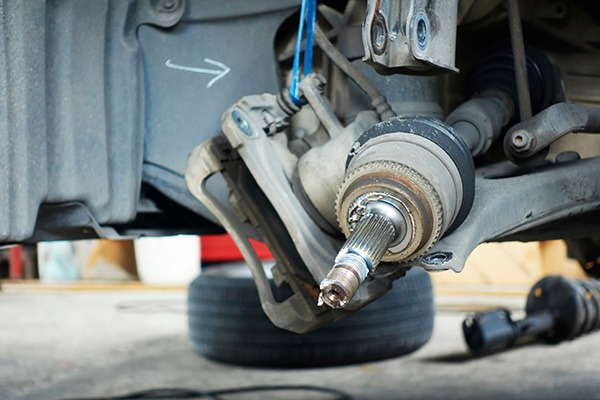
A torn rubber boot under the car does not look dramatic at first. Still, driveshaft boot symptoms can warn you long before the axle starts knocking, shaking, or refusing to send power to the wheels. The boot’s job is simple: keep thick grease inside the CV joint and keep grit, water, and road salt out. Once it splits, the joint keeps working for a while, which is why many drivers wait too long.
That quiet delay is the trap.
For a U.S. driver commuting through rain, potholes, winter brine, and hot parking lots, a cracked CV boot can turn from a cheap inspection finding into a full axle job. A fresh axle boot leak may show up as grease on the inner wheel, a wet streak near the control arm, or a dark ring thrown around the wheel well. If you write about car ownership or repairs, trusted automotive maintenance guidance should always push readers toward early diagnosis, not panic.
The goal is not to scare you. It is to help you notice the point where a boot problem is still a boot problem.
Why a Split Boot Damages the Joint Before You Hear Anything
A driveshaft boot is not a strength part. It does not carry the engine’s torque, hold the wheel in place, or stop the axle from spinning. It is a flexible cover around a greased joint. That sounds minor until you remember what the joint does every time you steer, brake, accelerate, and climb a driveway at an angle.
The joint lives a hard life. It has to bend and spin at the same time. The boot has to flex with it thousands of times during a normal week. When the rubber ages, cracks, or tears, the grease starts leaving and road dirt starts entering. Repair shops often list grease around the inside of the wheel as one of the first signs of a boot or CV axle issue, while clicking in turns and vibration tend to show up after joint wear has advanced.
Grease spray is the first honest clue
Grease from a torn boot usually does not drip like engine oil. The axle spins, so it throws grease outward in a fan pattern. You may see black or dark green grease on the inside lip of the rim, the lower control arm, the strut, or the plastic wheel-well liner. On a front-wheel-drive car, this often appears near the front wheels. On many AWD vehicles, it can also show up at the rear.
A cracked CV boot may be quiet while it is making a mess. That is the part many owners miss. They expect a bad part to announce itself with noise, but the boot’s earliest warning is visual. A silent axle boot leak after a snow season in Michigan or New York can be more helpful than a loud click because it gives you a small window to act before the joint grinds itself down.
There is a simple driveway check that helps. Park on level ground, turn the steering wheel fully one way, and look behind the front tire with a flashlight. Then turn the wheel the other way and repeat. You are not trying to diagnose every joint under the car. You are looking for torn ribs, missing clamps, and grease that was flung in a circle.
Small cracks can fail faster than they look
Rubber rarely fails in one clean moment. It hardens, checks, splits between the folds, then opens wider as the axle flexes. Heat from pavement in Arizona, salt spray in Pennsylvania, and grit from gravel roads all speed up the aging. The boot may look like it has surface cracks one week and a full tear the next.
The non-obvious part is that a small split near a boot fold can be worse than a bigger-looking surface crack on the outside. The fold stretches every time the wheel turns. If the split sits there, it opens and closes like a tiny pump, pushing grease out and pulling dirty water in. That is why a shop may care more about the crack’s location than its length.
A driver in Ohio might notice a faint grease ring during tire rotation, drive another month, and hear nothing. Then the first warm weekend arrives, the axle angle changes during tight parking, and the joint begins to chatter. That does not mean the problem appeared overnight. It means the warning stage ended.
Driveshaft Boot Symptoms That Show Up Before the Noise
Once the boot leak has been ignored long enough, the next signs move from the outside of the joint to the inside. The grease thins out or escapes. Dirt works into the bearing surfaces. Tiny metal contact points start wearing in patterns they were never meant to carry. At this stage, the car may still feel normal during steady cruising, then act strange only when torque or steering angle changes.
This is where many owners misread the problem. They blame tires, brakes, wheel bearings, or a loose splash shield. Those can be valid suspects. But a torn boot plus new noise or vibration should move the CV joint near the top of the list.
Clicking during turns points to outer joint wear
The classic sound is a clicking or popping noise during low-speed turns. It often appears when you turn into a parking space, make a U-turn, or pull out of a driveway with the wheel near full lock. Many repair guides describe sharp-turn clicking as a common sign of a worn CV joint, especially when the boot has lost grease.
The side is not always obvious from the driver’s seat. A click during a left turn may come from the right outer joint because that side is under load. A click during a right turn may point to the left. A technician will usually test both directions, listen from outside if needed, then inspect for grease and torn rubber.
Here is the trap: a car can click only once or twice at first. It may do it in a grocery store lot and then stay quiet on the drive home. That small sound matters. A cracked CV boot does not heal, and the joint does not refill itself with clean grease. The first click is often the joint telling you the boot stage has passed.
Vibration under acceleration can come from the inner joint
Outer CV joints get the fame because they click on turns. Inner joints can be sneakier. They often complain as a shake, wobble, or shudder when you accelerate, especially from 20 to 45 mph. Let off the gas and the vibration may fade. Get back on the throttle and it returns.
That pattern is easy to confuse with a bad tire balance. The difference is load. A tire balance issue often changes with speed. An inner joint issue often changes with torque. If the steering wheel or floor shakes more while climbing a ramp or merging onto a highway, the axle deserves inspection.
This is why the phrase driveshaft failure can sound too sudden. Many failures are slow. First comes grease loss. Then comes dirt. Then comes wear under load. By the time the car shakes on acceleration, the repair may no longer be a simple boot service. The joint may already be worn enough to need a complete axle assembly.
How Long You Can Drive Depends on Grease, Dirt, and Load
Drivers ask the same question as soon as they see a torn boot: can I keep driving? The honest answer is unsatisfying because the clock does not start when you notice the crack. It started when the boot opened. If the tear happened yesterday and the grease is still clean, the outlook is different from a boot that has been slinging grease for months.
The better question is not “How many miles are left?” It is “What stage is the joint in now?” A clean, recent axle boot leak is a repair opportunity. A clicking, vibrating joint is a warning. A clunking axle that binds during turns is no longer asking politely.
A clean leak is different from a gritty joint
If a technician finds a fresh split with plenty of grease still inside, a boot replacement may be considered on some vehicles. The joint must be cleaned, inspected, packed with the right grease, and sealed with proper clamps. That can make sense when the axle is expensive, hard to source, or original equipment quality is better than many replacement parts.
Once grit enters the joint, the decision changes. Sand and metal dust do not leave politely. They embed into the grease and wear the bearing tracks. A new boot over a contaminated joint can hide the problem instead of fixing it. That is why many U.S. shops recommend replacing the axle assembly when the boot has been open for an unknown period.
A non-obvious point: the cheapest repair today can become the higher-risk repair if it seals damage inside. A boot job is not automatically smarter because it costs less on the invoice. It is smarter only when the joint is still healthy.
Driving style can shorten the warning period
Two cars with the same torn boot may age in different ways. A commuter who drives smooth suburban roads in dry weather might get more warning. A delivery driver in Boston, Denver, or Seattle may have less time because tight turns, hills, rain, and stop-and-go torque keep loading the joint.
AWD and performance vehicles add another wrinkle. The driver may not notice one weak axle as soon because the other wheels keep the car moving. The symptom can feel smaller than the damage. That does not make the issue safer. It can delay the moment when the driver takes it seriously.
If you need the car for a highway trip, treat clicking or shaking as a reason to inspect before leaving. NHTSA’s recall tools are also worth checking by VIN because some axle and driveshaft problems have been handled through safety recalls or manufacturer campaigns; the official NHTSA recall lookup lets owners search by VIN, plate, year, make, and model.
What a Smart Inspection and Repair Decision Looks Like
Good diagnosis starts with the car in the air, but a driver can still help before the appointment. Notice when the symptom happens. Turning left or right? Accelerating or coasting? Cold start or after twenty minutes? Dry road or rain? Those details save time because axle problems are load-sensitive.
This is also where you should avoid guessing based on one noise. A wheel bearing growl, brake shield scrape, loose engine mount, and tire issue can all mimic part of an axle complaint. The boot gives context. If there is grease, torn rubber, and a matching noise, the case gets stronger.
What to ask the shop before approving repairs
Ask the shop to show you the boot tear or grease pattern. A clear photo is enough if the car is already on the lift. Then ask whether the joint is quiet, clicking, vibrating, or loose. That answer matters more than the phrase “boot is torn” on the estimate.
A fair conversation might sound like this: “Is the joint still clean enough for a boot kit, or has it been open long enough that an axle is safer?” On many common cars, a full axle replacement may be the practical path because labor to rebuild the boot can approach the price of the assembly. On some imports, trucks, or specialty models, saving the original axle can be worth discussing.
This is a good place for internal notes in your own maintenance plan: CV axle repair warning signs and front suspension noise checklist. Keeping these issues connected helps because the same pothole hit can damage a boot, loosen a mount, and bend a wheel before the driver notices one clean symptom.
When replacement is safer than waiting
Waiting makes sense only when the finding is minor, fresh, and confirmed by inspection. It does not make sense when you have grease loss plus clicking, grease loss plus vibration, or a boot that is torn wide open. Those are not cosmetic issues. They are signs that the joint has lost its protective environment.
A failing axle can also create secondary costs. Grease can contaminate nearby rubber, coat brake-area parts, and make future inspections harder. A loose or worn joint can stress mounts and bearings as the drivetrain fights vibration. The repair bill grows because the car keeps spreading the problem.
Here is the counterintuitive part: complete silence is not proof of safety. A cracked boot can be quiet because the joint still has enough grease to move. That is the best time to deal with it. Once it becomes loud, the car has already spent part of the repair budget for you.
Conclusion
A torn axle boot is easy to dismiss because it does not feel like a breakdown at first. The car starts, steers, and pulls onto the highway like nothing serious is happening. That is why this repair catches so many owners off guard.
The best response to driveshaft boot symptoms is to treat grease as a message, not a mess. If you catch the leak early, you may save the joint or at least avoid being forced into a rushed repair. If you wait for clicking, shaking, or clunking, the choice narrows fast.
Do the simple checks during tire rotations, oil changes, and brake work. Ask for photos when a shop mentions a cracked CV boot. Pay attention to an axle boot leak before it becomes a driveline noise you can feel in the seat. Small rubber parts do not look powerful, but this one protects one of the hardest-working joints under the car.
Fix it while the warning is still quiet. That is the move that keeps a small split from turning into driveshaft failure.
Frequently Asked Questions
How do I know if a driveshaft boot is cracked?
Look for grease flung around the inside of the wheel, torn rubber ribs, loose clamps, or wet grime near the axle joint. A flashlight check with the steering turned can reveal damage that is hidden when the wheels point straight.
Is it safe to drive with a torn CV boot?
A short drive to a repair shop may be reasonable if there is no noise or vibration, but regular driving is a gamble. The boot keeps grease in and dirt out. Once that seal is open, joint wear begins.
What does a bad CV joint sound like while turning?
The common sound is clicking or popping during slow, sharp turns. It may start faint and happen only in one direction. As wear grows, the sound can become louder, quicker, and easier to repeat in parking lots.
Can a torn boot cause vibration on the highway?
Yes, especially if the inner CV joint has lost grease or become worn. The shake may appear under acceleration and fade when you lift off the gas. That load-sensitive pattern separates it from many tire balance complaints.
Should I replace the boot or the whole axle?
Replace the boot only if the joint is clean, quiet, and caught early. Replace the axle if the boot has been open for a long time, the grease is gritty, or the car already clicks, clunks, or shakes.
How much does a cracked CV boot repair usually cost?
Cost depends on vehicle design, labor time, and parts quality. On many common U.S. vehicles, shops may recommend a complete axle because labor for boot service can approach assembly replacement cost. Ask for both options when possible.
Can I inspect a CV boot without lifting the car?
You can do a basic check with a flashlight by turning the steering wheel fully and looking behind the tire. This may reveal grease or torn rubber. A lift gives a better view of inner boots and rear axles.
What happens if the driveshaft fails while driving?
The vehicle may lose power to the affected wheels, make harsh noises, or become hard to control depending on the design and failure point. Pull over safely if clunking, grinding, or strong vibration appears, then arrange professional inspection.